
What Does PVC Banner Stand For? The Ultimate Guide to Vinyl Signage
If you have ever attended a trade show, walked past a construction site, or seen an advertisement hanging outside a shop, you have almost certainly looked at a PVC banner. They are one of the most ubiquitous forms of advertising in the world.
But when it comes to ordering signage for your own business or event, the technical jargon can get confusing. The most common question asked is simply: What does PVC banner stand for?
In short, PVC stands for Polyvinyl Chloride.
However, knowing the chemical name doesn’t necessarily help you decide if it’s the right material for your needs. In this guide, we will break down exactly what a PVC banner is, why it is the gold standard for affordable signage, and the different types available.
The Technical Definition: Understanding the Material
PVC (Polyvinyl Chloride) is one of the most widely produced synthetic plastic polymers in the world. It is used in everything from water pipes and window frames to medical devices and bank cards.
But a PVC banner isn’t just a flat sheet of plastic.
The “Scrim” Secret

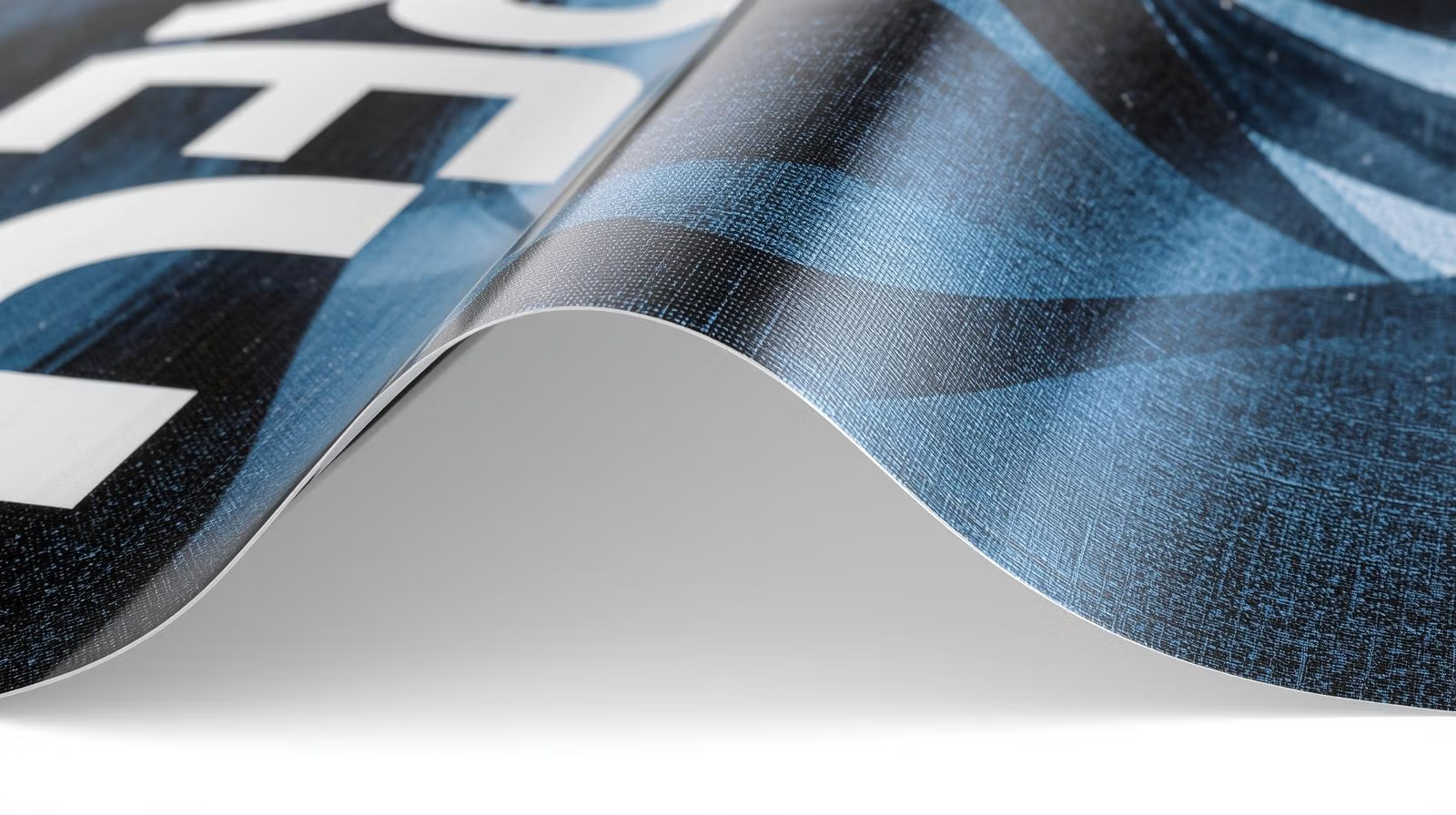
If you look closely at a high-quality PVC banner, you might notice a very subtle texture. Vinyl banners used in professional printing are actually a composite material.
They feature a central layer of polyester mesh (sometimes called “scrim”) sandwiched between two layers of liquid PVC.
• The Polyester Mesh provides tear strength and dimensional stability (stopping it from stretching out of shape).
• The PVC Coating provides a smooth surface for vibrant printing and makes the banner waterproof and weather-resistant.
When people refer to “vinyl banners,” they are almost always talking about PVC banners. The terms are used interchangeably in the print industry.
Why Are PVC Banners the Industry Standard?
PVC hasn’t become the dominant material for large format printing by accident. It offers a unique combination of features that make it ideal for both short-term events and long-term outdoor advertising.
1. Unmatched Durability and Weather Resistance
This is the primary selling point. PVC is naturally waterproof and highly resistant to UV sunlight, rain, and wind. Unlike paper or standard fabrics, a PVC banner left outdoors in a storm will still be legible the next day.
2. Cost-Effective Marketing
Compared to permanent rigid signage (like metal or acrylic), PVC banners are incredibly affordable. They offer a massive surface area for your marketing message for a relatively low cost, providing an excellent Return on Investment (ROI).
3. High-Impact Print Quality
Modern large-format digital printers can print directly onto the surface of PVC with stunning results. The material accepts solvent, eco-solvent, and UV-curable inks exceptionally well, resulting in vibrant colors and photo-realistic graphics that grab attention from a distance.
4. Versatility and Ease of Use
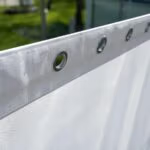
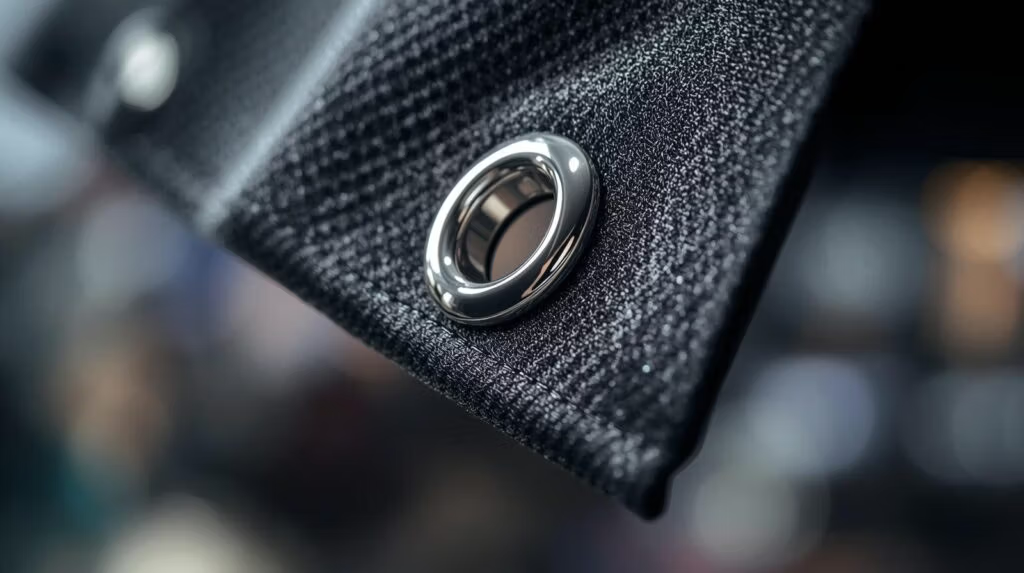
Because they are essentially flexible sheets of plastic, PVC banners can be rolled up for easy transport and storage. They can be finished with hemmed edges and metal eyelets (grommets), making them easy to hang with ropes, bungee cords, or cable ties almost anywhere.
Common Uses for PVC Banners
Because of their versatility, you will see PVC signage used in dozens of different scenarios:
• Outdoor Advertising: Roadside banners promoting sales or grand openings.
• Events and Festivals: Stage backdrops, crowd control barriers, and directional signage.
• Construction Sites: Mesh PVC banners attached to scaffolding to hide worksites and advertise the development.
• Trade Shows: Durable exhibition graphics that can be reused multiple times.
• Sports: Sponsorship banners lining football pitches or tennis courts.
Types of PVC Banner Materials (GSM Explained)
Not all PVC banners are created equal. When ordering, you will usually see a number referring to “GSM.”
GSM stands for “Grams per Square Meter.” It is a measure of the weight and thickness of the material. Generally, a higher GSM means a thicker, stronger, and more durable banner.
You will also need to choose between standard PVC and Mesh PVC.
The PVC Banner Comparison Table
Here is a quick guide to help you choose the right type for your project:
| Material Type | Typical GSM | Key Feature | Best Use Case |
|---|---|---|---|
| Economy PVC | 340gsm – 440gsm | Lightweight and budget-friendly. | Short-term events, indoor use, or temporary outdoor birthday/celebration banners. |
| Premium/Heavy Duty PVC | 500gsm – 550gsm | The industry standard. Strong, thick, and very durable. | Long-term outdoor signage, shop fronts, and banners likely to face average weather conditions. |
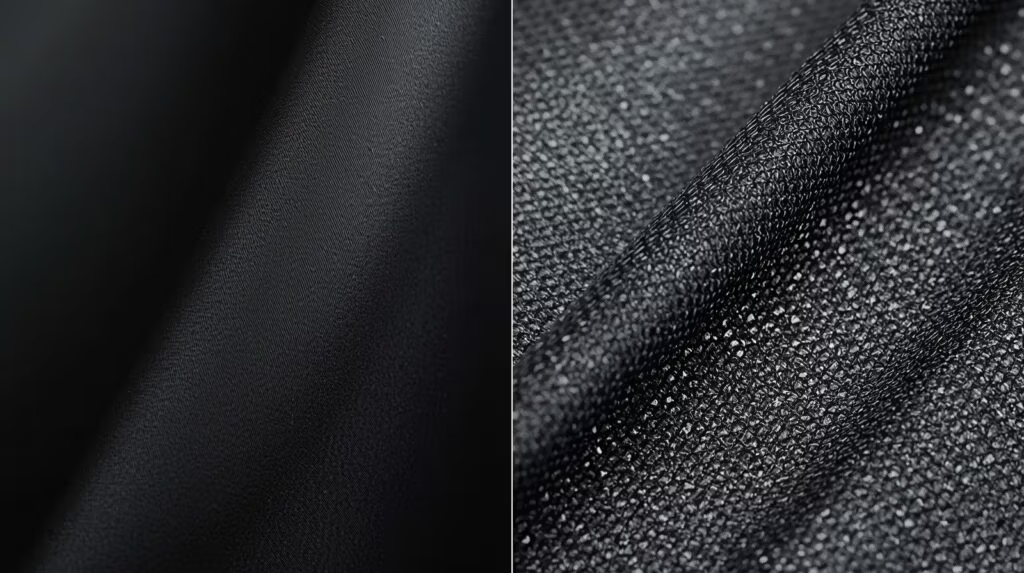
| Mesh PVC | 270gsm – 350gsm | Perforated with thousands of tiny holes to let wind pass through. | Large banners in windy locations, scaffolding wraps, and building facades. |
| Blockout PVC | 500gsm+ | Has a black internal layer to stop light passing through. Allows for double-sided printing. | Hanging banners where both sides are visible, or banners placed against bright light sources. |
Conclusion
So, what does PVC banner stand for? Technically, it stands for Polyvinyl Chloride. But practically, it stands for durable, affordable, and versatile advertising.
Whether you need a temporary sign for a weekend market or a massive display for a construction site that needs to last six months through winter, PVC is usually the best material for the job.
By understanding the basics of GSM and the difference between mesh and standard vinyl, you can ensure you order the perfect banner for your next project.
Need a PVC banner in a hurry? Based in Essex, we offer high-quality printing with fast turnaround. Www.essexbanners.com